The “Seeing is Believing” Window has Closed
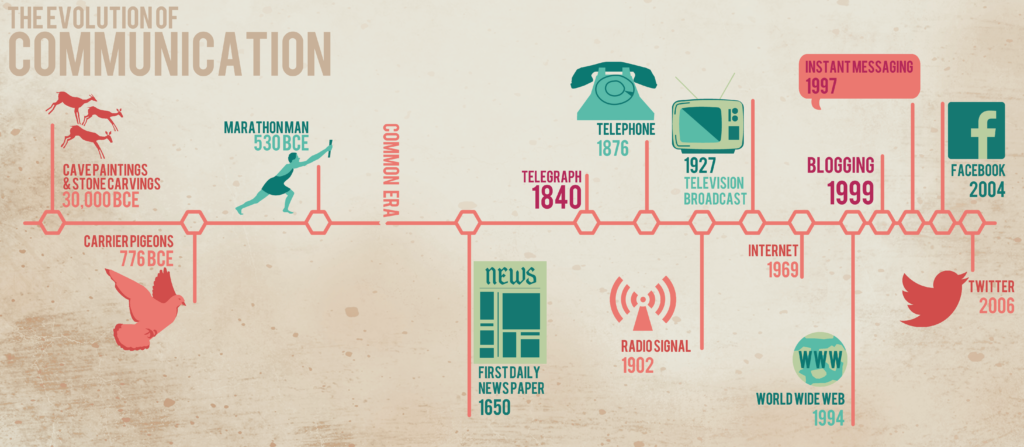
For most of human history, you couldn’t verify something unless you were there yourself. First there was word-of-mouth, then drawing and writing. If someone witnessed an event, they could only tell you about it: you had to decide whether or not it really happened.
Film changed that. Photos and videos became increasingly common and clear. Methods of faking them grew as well, but those methods were generally more laborious than creating real media. Meanwhile, advances in communication technology allowed these captured realities to spread throughout the world. “Seeing is believing” became the status quo in media, which lasted for over a century.
That brief window is now over. Generating fake media has become cheaper and easier than recording real events, and the resulting flood will only continue to drown out reality on any communication platform which allows open sharing.
We’re back to square one. That’s a scary thing, of course, but there’s a silver lining: humanity has dealt with this situation before. How can we do it again?
The Awkward Transition
The most dangerous thing about the death of “seeing is believing” is that we still think it’s true. It’s one thing to admit the window has closed, and another to avoid running into the glass.
When I was a child, any non-professional photoshop was easy to spot. Then those tools became cheaper and easier to use. Now I have to apply it to video as well. But it doesn’t come naturally: I’m used to taking videos at face value, and that habit has become a liability.
I’m not alone, of course. If you want to play a fun game and experience a little existential dread, just browse this subreddit and make bets on whether pics are AI-generated before opening the comments. It’s shockingly difficult, and the faster you scroll the more impossible it becomes… And that’s when we know we’re looking for AI! If your hit-rate is terrible, don’t feel bad: even the experts aren’t very good at this.
In normal social media usage, we’re liable to forget to second-guess at all. It’s simply not a habit we’ve formed yet.
Know Thy Enemy
If you want to avoid being fooled, you have to know who’s trying to fool you and why. That will allow you to narrow your focus, inspecting and verifying high-risk content more carefully.
Scams are an obvious one: they’re on the rise in Toronto, as AI content makes it easier to personalize scam content to its victims. Traditional anti-scam advice applies here, and should be reinforced: there is plenty of curriculum designed to do this already, including this course (which the UVic employees among us are likely already familiar with).
I’m also a big fan of making examples of real scams available to the public, as UVic’s own Phish Bowl does. Seeing real scams drives home the imminent nature of the threat, while “red flag” annotations teach learners exactly what to look out for. This type of content will need to be updated with warnings regarding falsified audio or visual recordings of loved ones, employers, and other people who scammers may want to impersonate.
Know Thyself
Tips on identifying this sort of content may be valuable (and there are some great tips out there), but the most important thing is to know and expect that you won’t always be able to tell the difference. Luckily, some of Canada’s resources seem to be moving in this direction, focusing on understanding underlying motives rather than identification of individual examples.
That needs to be the core of any anti-misinformation curriculum: not merely “fakes exist, here’s how to detect them”, but “fakes exist, and you can’t always detect them, but here’s how to protect yourself anyway”. That’s the best we could hope for when our tools were storytelling or telegrams or newspapers, and now it’s the best we can hope for on social media as well. Internalizing that fact is the best way to mitigate harm.
Hi Rem, I thought you brought some especially great perspectives in this week’s blog post.
While I do consciously look out for fake/GenAI content, I hadn’t even thought to directly challenge the whole “seeing is believing” saying/rule.
Some sources claim that this saying originated from Thomas Fuller in the 17th century, where his full original quote was “seeing is believing, but feeling is the truth”. (Ironically, I can’t find many reputable sources backing this claim). While this is full speculation on my part, I like to think that the latter part of the phrase was cut off as it became unnecessary with the advent of advancements such as photography. Suddenly, you could simply believe what you saw in an image, and there was no longer a way to actually *feel* it.
Now, as we are losing the ability to believe what we see, it feels like the second half of the original phrase is becoming necessary again; in an age of intentional misinformation, feeling and experiencing things for yourself are turning back into the only ways you can believe something with 110% certainty. Though with due diligence and the building of a trustworthy PLN, you should hopefully still at least be able to get close to 100% certainty.
Love this angle! Thanks.