Public Figures as Content Filters
While I was listening to Sophie Lui discussing the changing nature of journalism and public engagement, the theme which struck me the most was the shift from a “producer -> consumer” model to a more cyclical interaction.
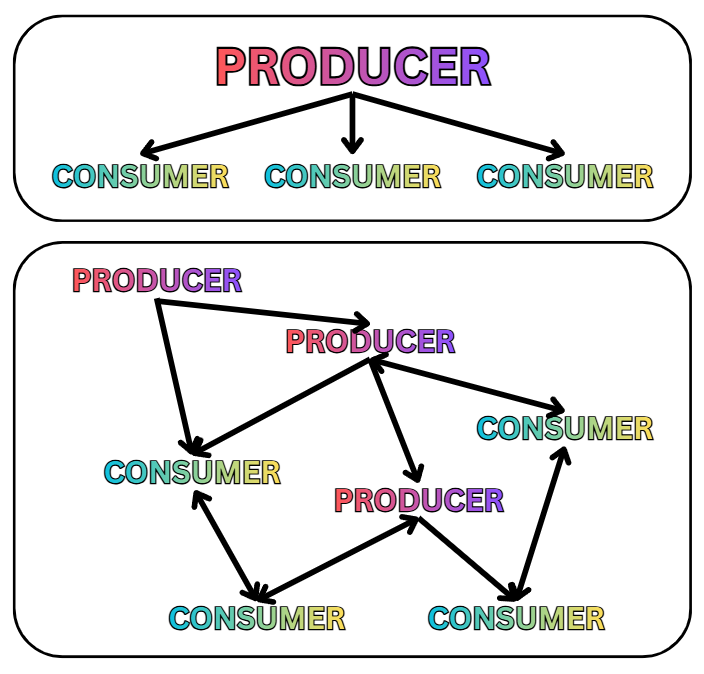
For example, on the consumer side, the relatively-private practice of hate mail has been superseded by a more public and interactive kind of vitriol. Critical audience members talk amongst themselves, generally in fully-public online spaces, in full view of each other and the subject. Some public figures will dive into the hate, interacting with even the most critical, low-effort commentary; others will read it in silence, reflecting and/or trying not to take it to heart; and some will make every effort to ignore it or block it out.
Of course, these different kinds of engagement aren’t entirely new: stand-up comedians deal with hecklers, and Sophie Lui discusses taking complaint calls about herself (wherein the caller was not aware of her identity). However, the “screaming into the public square” method of criticising public figures has gone from being the exception to being the norm. Unsurprisingly, that screaming has real-world outcomes: it’s not just the content of journalism which captures hearts and minds, but also the discourse surrounding that journalism.
So if consumer-to-consumer interaction has become the norm, what about producers? Now they’re consumers as well! The most direct example of this is sharing existing content: reblogging, reposting, retweeting, etc. When a public figure consumes content, it can instantly be amplified and broadcast as part of their own content and brand.
For public figures seeking to get their message out there while avoiding scandal, this is an absolute minefield.
Spreading and Retracting Misinformation
When a public figure shares existing content, they’re placing themselves between the producer and the consumer. They act as a sort of content filter: an audience has formed around them, and it is their role to reach into the unmanageable sea of the internet, pluck out certain important/interesting/relevant information, and pass it along to anyone who happens to be listening.
So what happens when that information is wrong?
It will be, sometimes, and it may not be possible to reliably vet it before posting: real media and fake media can appear absolutely identical. Mistakes will be made. So for a public figure in the role of a content filter, “acting responsibly” is as much about responding to lies as it is about avoiding sharing them in the first place.
There have been countless words written about how to retract and apologize, since before social media existed. I will focus on one aspect: the explanation.
“Why did I believe this, and deem it worthy of sharing with all of you?”
Putting aside how realistic a piece of media may appear (again, that’s not a reliable method), the main answer to the above question is often “because I wanted to believe it, and thought you would too”. Interesting, affirming, and shocking information is a commodity: as Navigating Social Journalism emphasizes, its value to the producer is riddled with perverse incentives, and its value to the consumer is inflated (or deflated) by confirmation bias.
By standing in the role of both producer and consumer, public figures who amplify existing content are subject to both of these risks simultaneously.
Acknowledging these facts in the wake of a social media mishap can be a powerful tool: good apologies are all about accountability, and social media is no exception. If you shared lies with an audience who trusted you, they will want to know that you understand why that happened. In that context, acknowledging one’s own bias is a show of strength, not weakness.
Media Literacy Pushback: The Easy Way Out
Of course… Not everyone will see it that way. People don’t like to be made the fool, and sometimes a discussion regarding media literacy won’t soothe them.
So for every well-rounded “I screwed up, and this is why” retraction, you’ll find plenty of cop-outs: “Well, that article may be fake, but the fact that we believed it says something about the sad state of [insert thing they spread lies about]”.
We all know this is disingenuous behavior. When your thesis statement is “Here’s how me being incorrect proves my point”, you’re not fooling anyone who doesn’t already agree with you. But that’s the trouble, isn’t it? Most of the time, you are talking to an audience who already agrees with you.
Conclusion
The tough thing for journalists in particular is that they’re expected to be correct, while being just as subject to perverse incentives surrounding the commodification of opinions as any other public figure.
I certainly don’t envy that position. Journalism has never been simple, but being sandwiched between the producer and consumer media literacy pitfalls is a risky gig.
First of all, I LOVE the visual aid. It really helped visualize something about the modern internet I’ve noticed in recent years but could never think of a good description for.
Second. You made some extremely good points about the responsibility of public figures to share accurate information and own up to mistakes. Especially the point you made about how try as we might mistakes will still happen. As much as these figures have a responsibility to review and verify the information they share, they are still human and will make mistakes even with the best of intentions. I think that is one of the most important lessons anyone can learn, online or in real life
Thanks very much for the feedback!
I think this blog post is insightful, especially how you clearly explain the shift in media from a “producer → consumer” model to a cyclical, interactive one—it’s very thought-provoking. It’s true that communication is no longer one-way; everyone is influencing each other now. Your observation that public figures are both content producers and consumers rings especially true. It pinpoints why they’re more prone to misinformation and reputational risks. I also agree with your take on apologies and explanations—acknowledging one’s biases is a sign of maturity, not weakness. Overall, you blend theory with real-world examples seamlessly, and your tone remains rational rather than emotionally charged. I really appreciate that.
I really enjoyed how you made a complex topic feel intuitive and grounded, especially the point about public figures acting as both producers and consumers of content and how that puts them in a tricky position with misinformation. It actually made me think about how much trust we place in people online and why it matters when they share something inaccurate, because their audience often takes it as truth. Your explanation felt honest and practical rather than preachy, and it gave me a lot to think about in terms of how we all engage with media in our own feeds.